> For the complete documentation index, see [llms.txt](https://wamoca.gitbook.io/wamoca-docs-en/llms.txt). Markdown versions of documentation pages are available by appending `.md` to page URLs; this page is available as [Markdown](https://wamoca.gitbook.io/wamoca-docs-en/our-platform/message-templates.md).
# Message Templates
**Before you can set up whatsapp templates, you must connect your account to WhatsApp.**
Message templates **allow users to create pre-defined message formats for automated communications**, leveraging the WhatsApp Business API.
This feature makes it easy to create, sync and delete templates to **streamline messaging workflows and ensure compliance with WhatsApp messaging policies**.
## List of templates
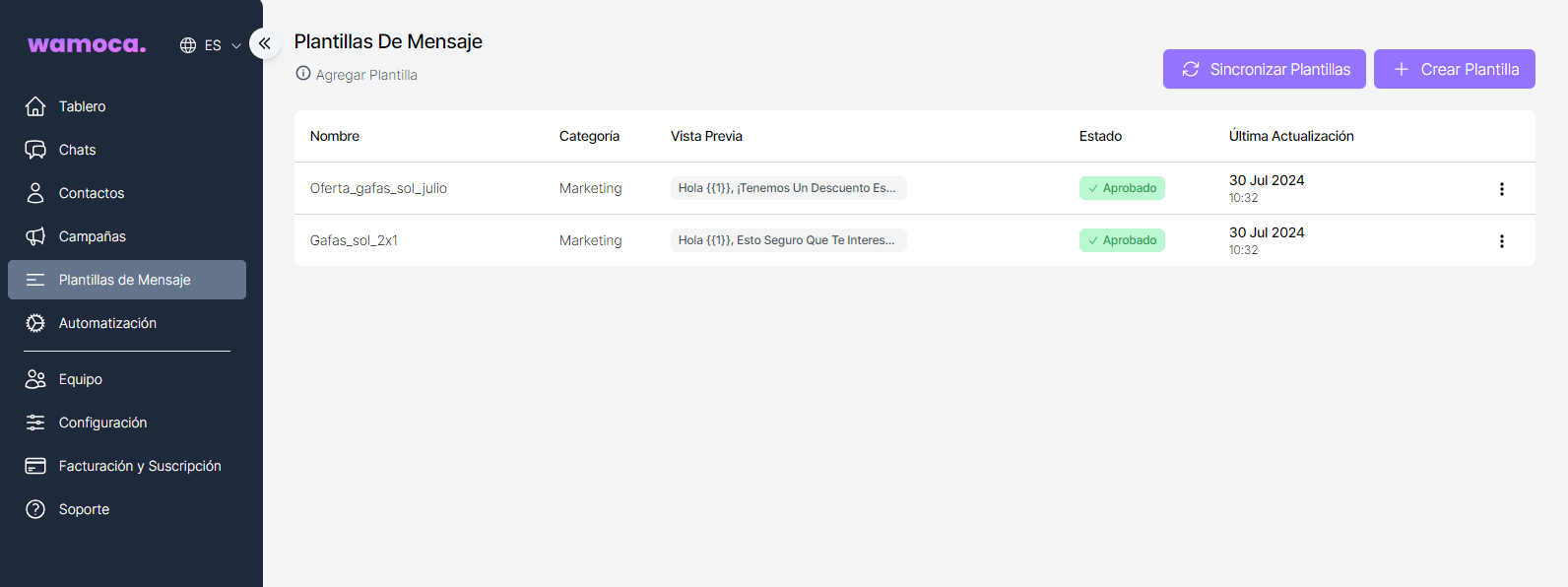
The template list will display all the message templates created in your WhatsApp Business account. The fields that appear in the list are:
* Name: name of the template
* Category: there are different message categories in WhatsApp, at the moment we only allow you to create message templates from the Marketing category
* Preview
* **Status**: status of the template in WhatsApp Business**. WhatsApp must approve our templates before they can be sent to customers**. Statuses can be: Pending, Approved or No approved
From here, we can:
* **Create message templates** and integrate them with our WhatsApp Business account immediately
* **Synchronise templates** with our WhatsApp Business account to keep their status up to date
List of templates
## Creation of templates
In the template creation screen there are several sections:
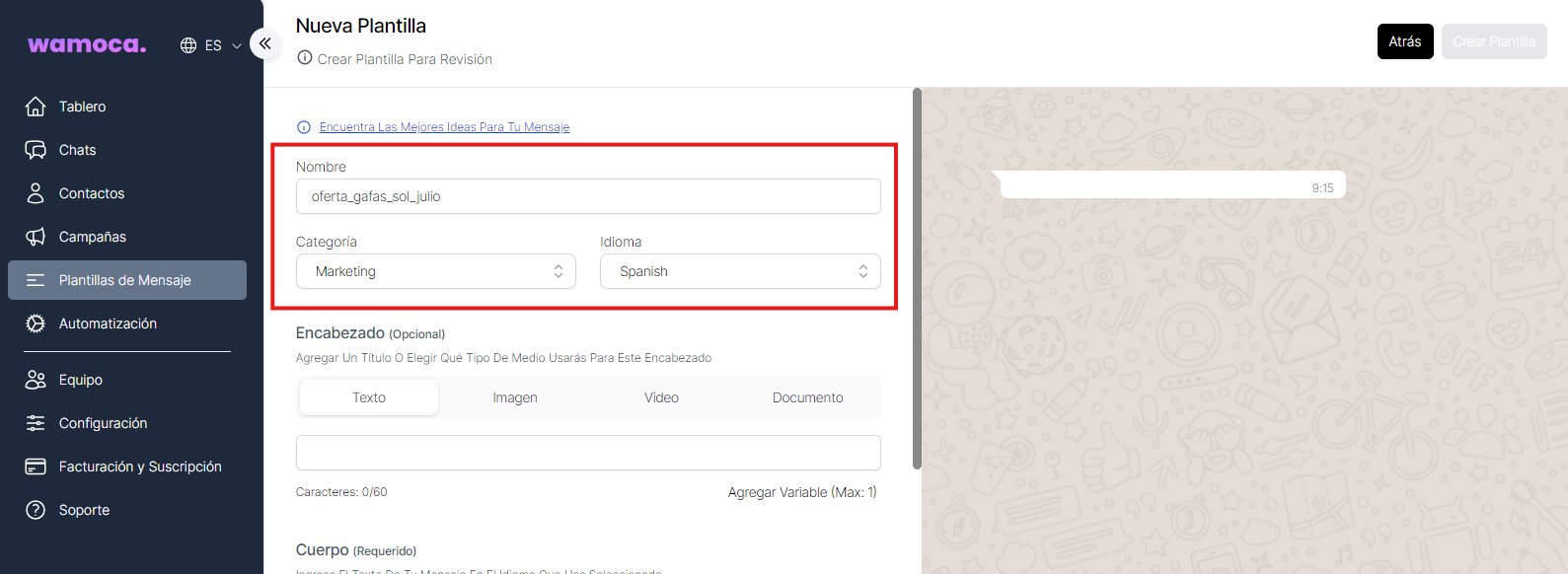
### Basic data (required)
Datos básicos plantilla
* **Name**: name of the template
* **Category**: category of the template (at the moment we only support Marketing)
* **Language**: language of the template
### Heading (optional)
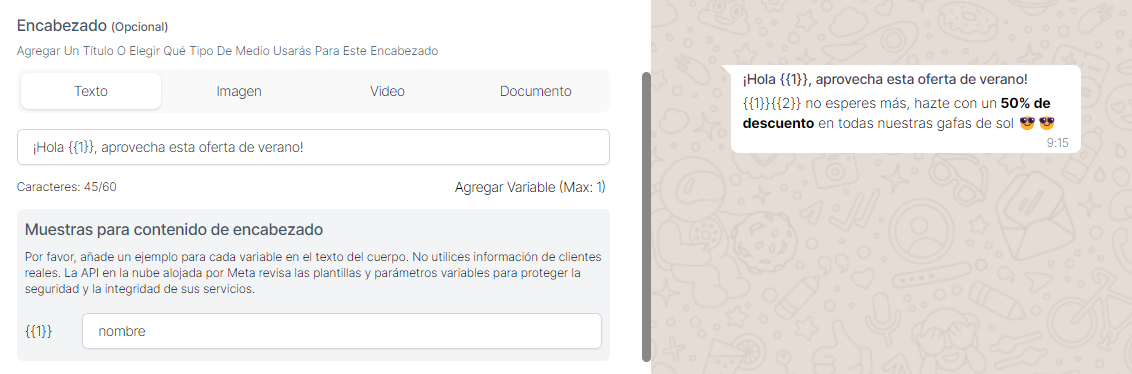
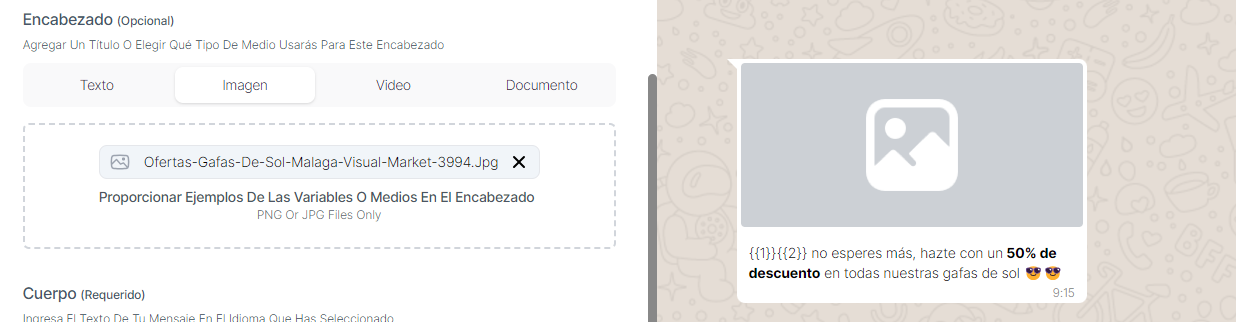
This is the header field of the message. It can be of four types:
* **Text**: text field in which we can add a dynamic variable (client's name, client's surname, etc.). This dynamic variable will be configured when creating a campaign.
Text in heading
* **Image**: image to be set up when creating a campaign
Header image
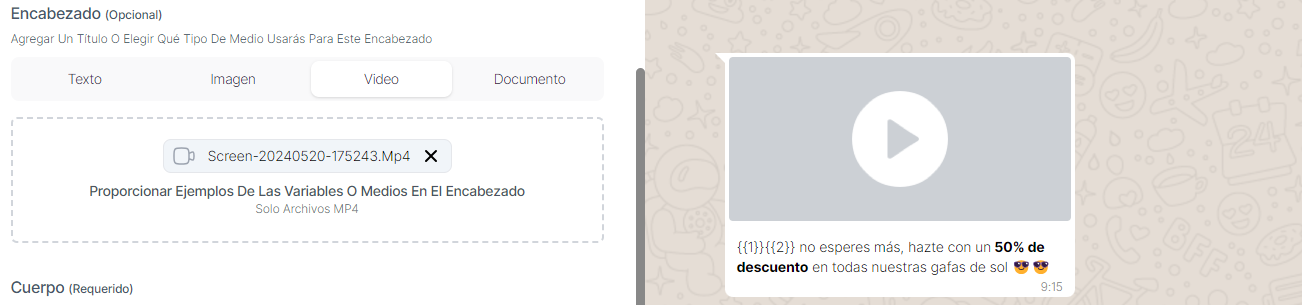
* **Video**: video to be set up when creating a campaign
Video in header
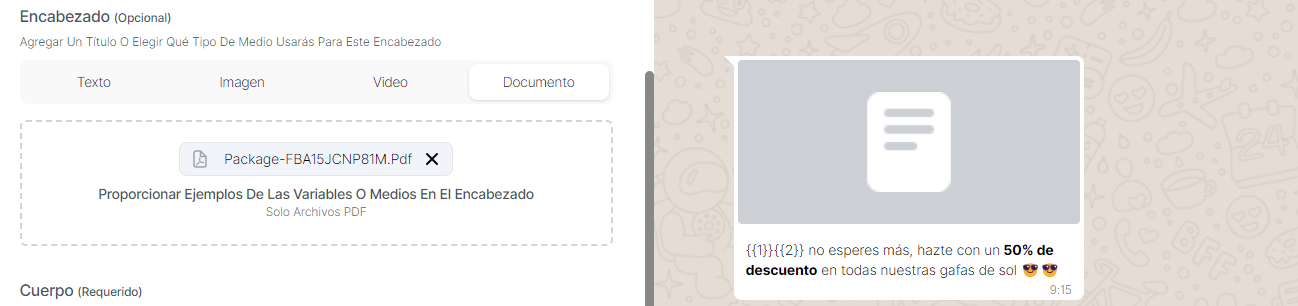
* **Document**: document to be set up when creating a campaign
Header document
### Body (required)
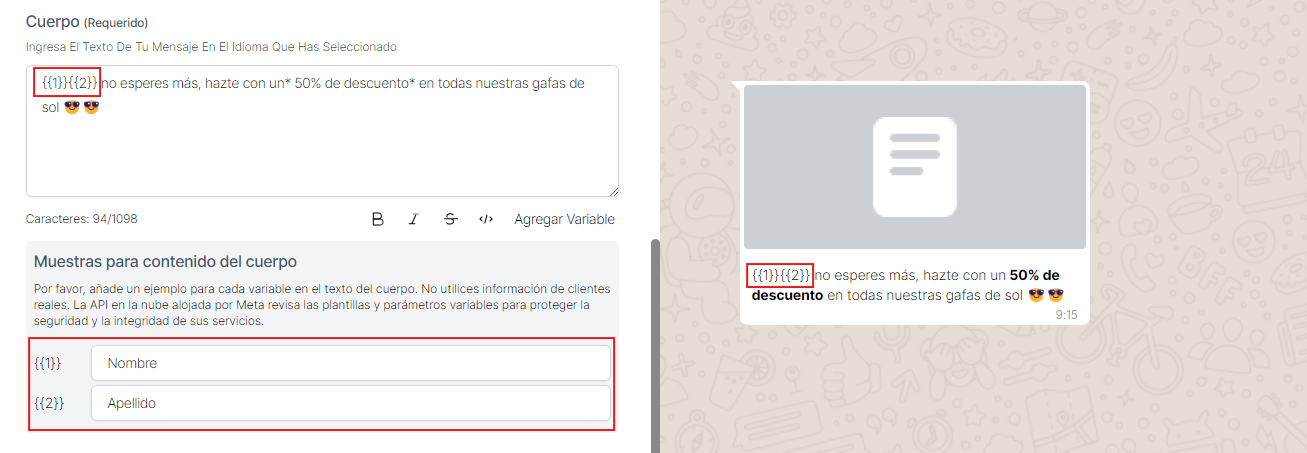
This field is the main text of the message. Here we can format the text (bold, italics, etc.) and add dynamic variables that will be configured in the campaign.
Body of the template
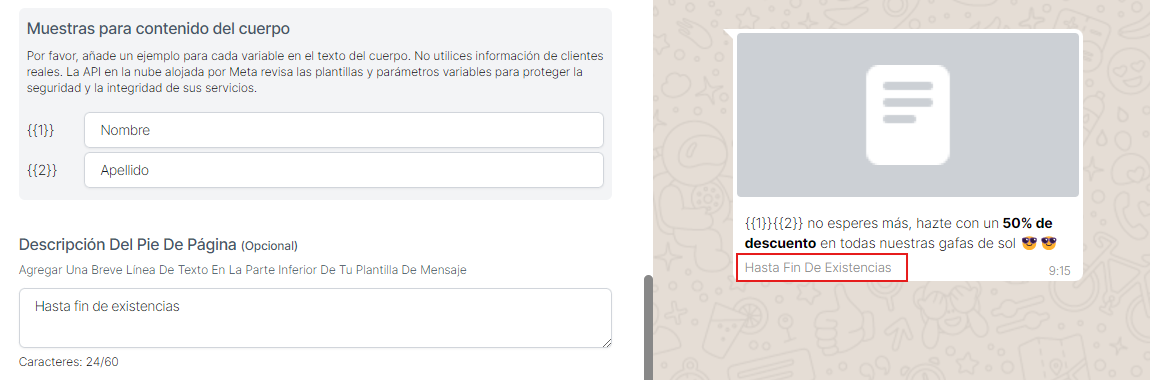
### Footer description (optional)
Template message footer
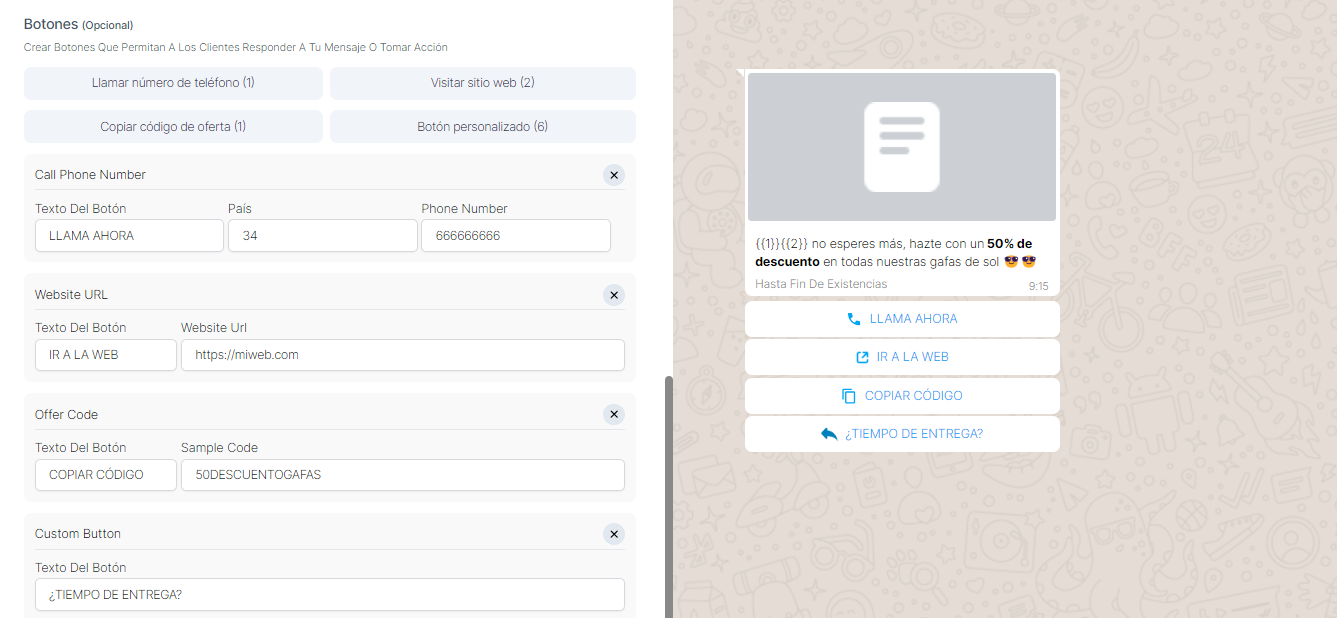
### Buttons (optional)
Buttons template
This field is the buttons or CTAs of the message. It is an optional field but highly recommended for conversion. There are four different types of buttons:
* **Phone**: button to call a phone or mobile number
* **Website**: external link button
* **Copy offer code**: button to copy a discount code (to be configured in the campaign)
* **Custom button**: button to send message. If the customer presses the button a text message with its value will be sent (set up in the campaign). This is very useful for autoresponders